

Aircrete advice

Frequently Asked Questions

Find answers to common questions about aircrete, from product selection and performance to installation, technical guidance and sustainability.

What are aircrete blocks?

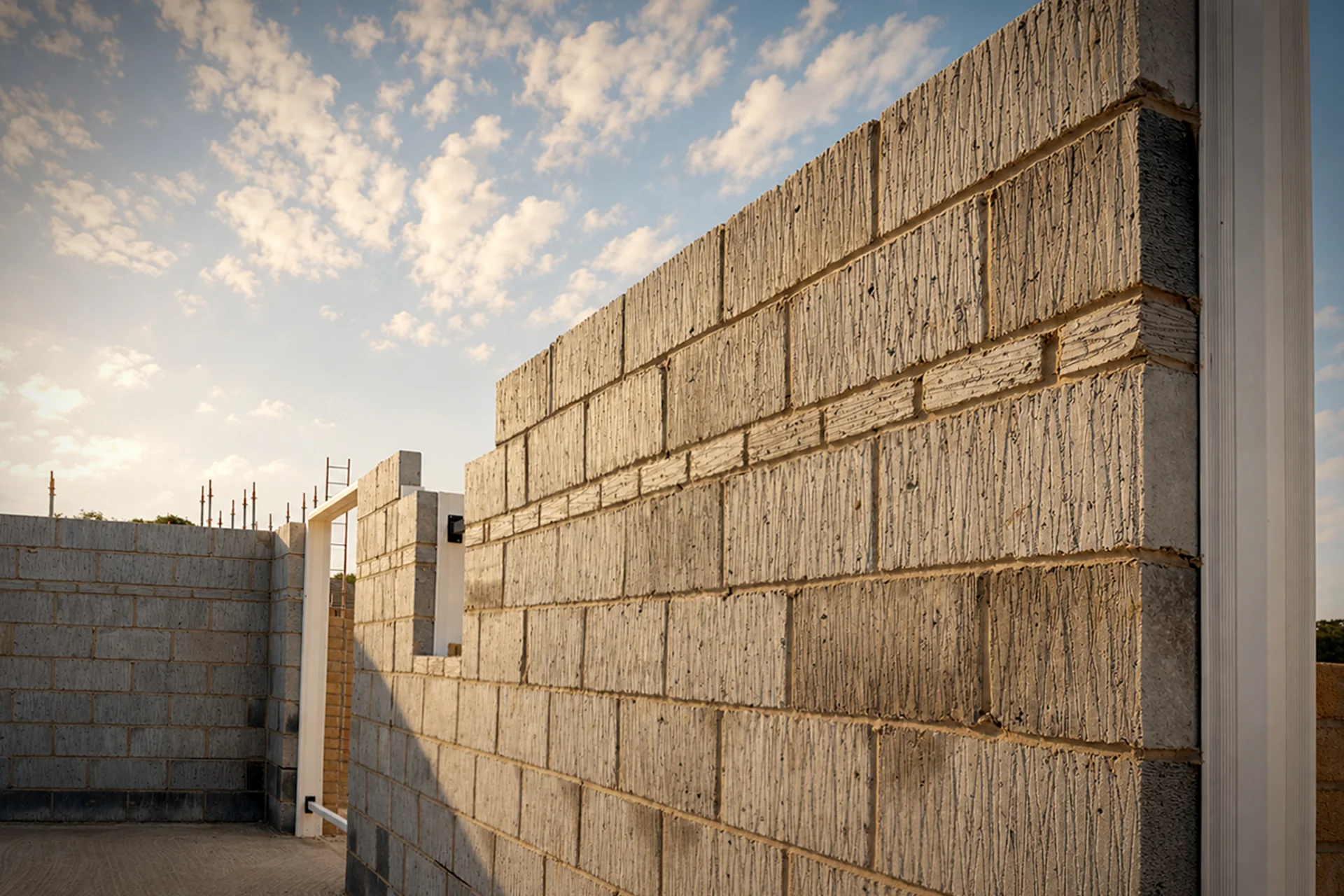
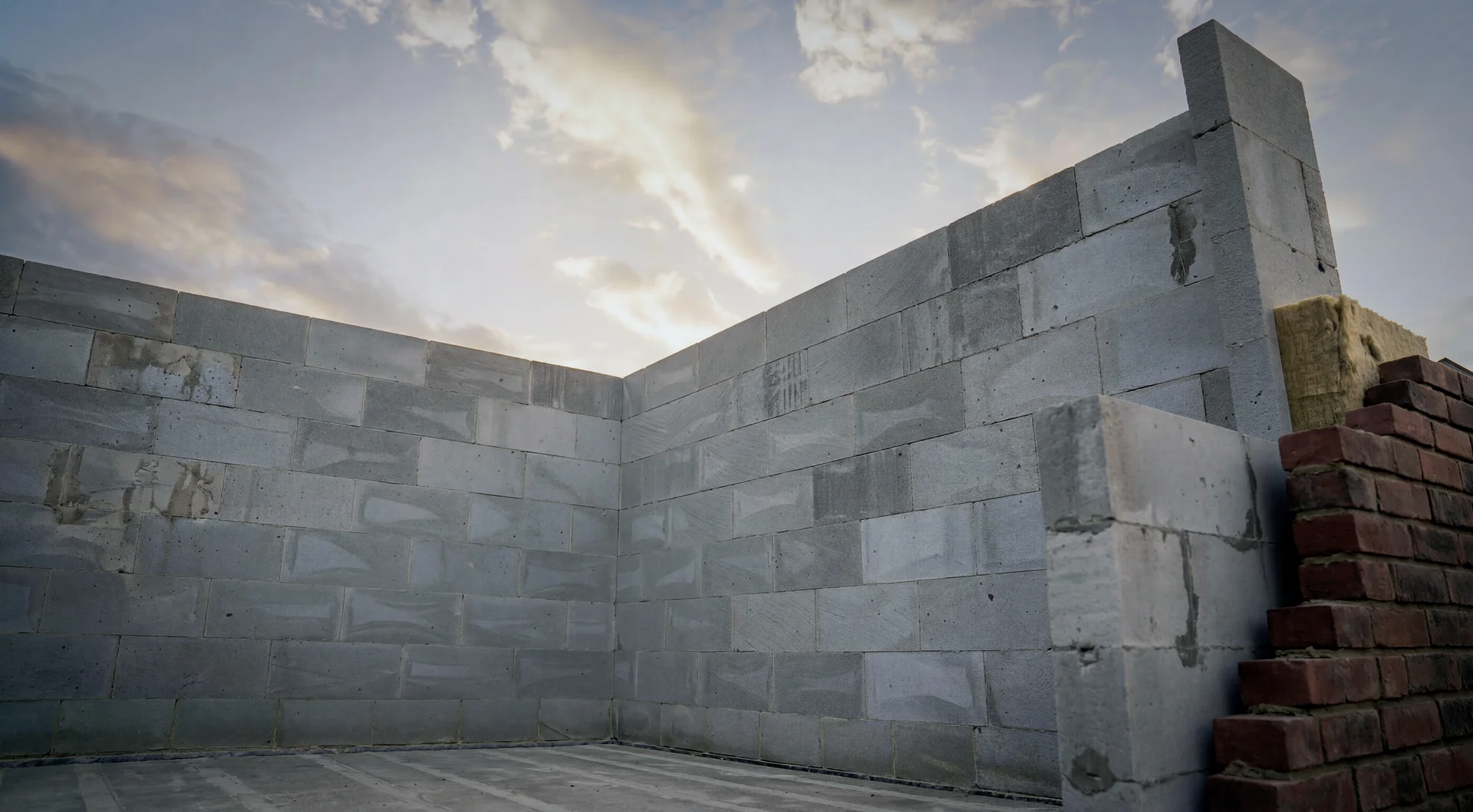
Aircrete blocks are lightweight masonry units made from cement, lime, water and silica-rich materials. Millions of tiny air pockets formed during manufacture create a material that is lighter than traditional concrete while providing excellent thermal performance, fire resistance and ease of installation.

H+H aircrete blocks are manufactured in the UK and available in a range of strengths and sizes for applications including foundations, external walls and internal partitions.

Benefits of aircrete

Excellent thermal efficiency

Lightweight and easy to handle

Faster installation

Outstanding fire resistance

Good acoustic performance

Available in a range of strengths

FAQs

Are aircrete blocks strong enough for load-bearing walls?

Yes.


Aircrete blocks are available in several compressive strength grades designed for load-bearing construction.

The appropriate grade depends on the building type, structural design and loading requirements. H+H offers blocks suitable for everything from low-rise housing to more demanding structural applications.

Always follow the structural engineer's specification when selecting block grades.

Are aircrete blocks energy efficient?

Yes.


The millions of tiny air pockets within aircrete create excellent thermal insulation, helping walls retain heat during winter and remain cooler in summer.

Using thermally efficient aircrete can:

  • Improve U-values
  • Reduce thermal bridging
  • Lower heating demand
  • Help meet Part L Building Regulations
  • Support Future Homes Standard requirements
Can aircrete blocks be used below ground?

Yes


Regular Celcon Blocks can be used below the DPC to form both the internal and external leaves of cavity foundations.  For an even fast build, Celcon Foundation Blocks of 275mm thickness and upwards can be used to form solid foundation walls

Are aircrete blocks fire resistant?

Yes.


Aircrete is a non-combustible material and achieves Euroclass A1 reaction to fire classification.

Walls constructed with aircrete can provide excellent fire resistance when designed in accordance with relevant standards.

How do you cut and install aircrete blocks?

One of the advantages of aircrete is how easy it is to work with.


Blocks can be cut using:

  • Hand saws
  • Alligator saws
  • Band saws


Installation can be carried out using either traditional mortar or H+H's Celfix Thin Joint System, depending on the product and construction method.

Do aircrete blocks provide good sound insulation?

Yes.


Aircrete walls contribute to good acoustic performance when incorporated into a correctly designed wall construction.


The final sound insulation performance depends on:

  • Block thickness
  • Wall construction
  • Finishes
  • Cavities
  • Overall wall design


H+H provides tested wall solutions for a wide range of applications.

Are aircrete blocks sustainable?

Aircrete offers strong environmental credentials throughout its lifecycle.


H+H products:

  • Are manufactured in Britain
  • Use up to 70% recycled material
  • Are produced using 100% renewable electricity
  • Have independently verified Environmental Product Declarations (EPDs)
  • Support Whole Life Carbon Assessments (WLCA)
  • Can contribute towards BREEAM and net zero carbon projects

How do aircrete blocks compare with concrete blocks?

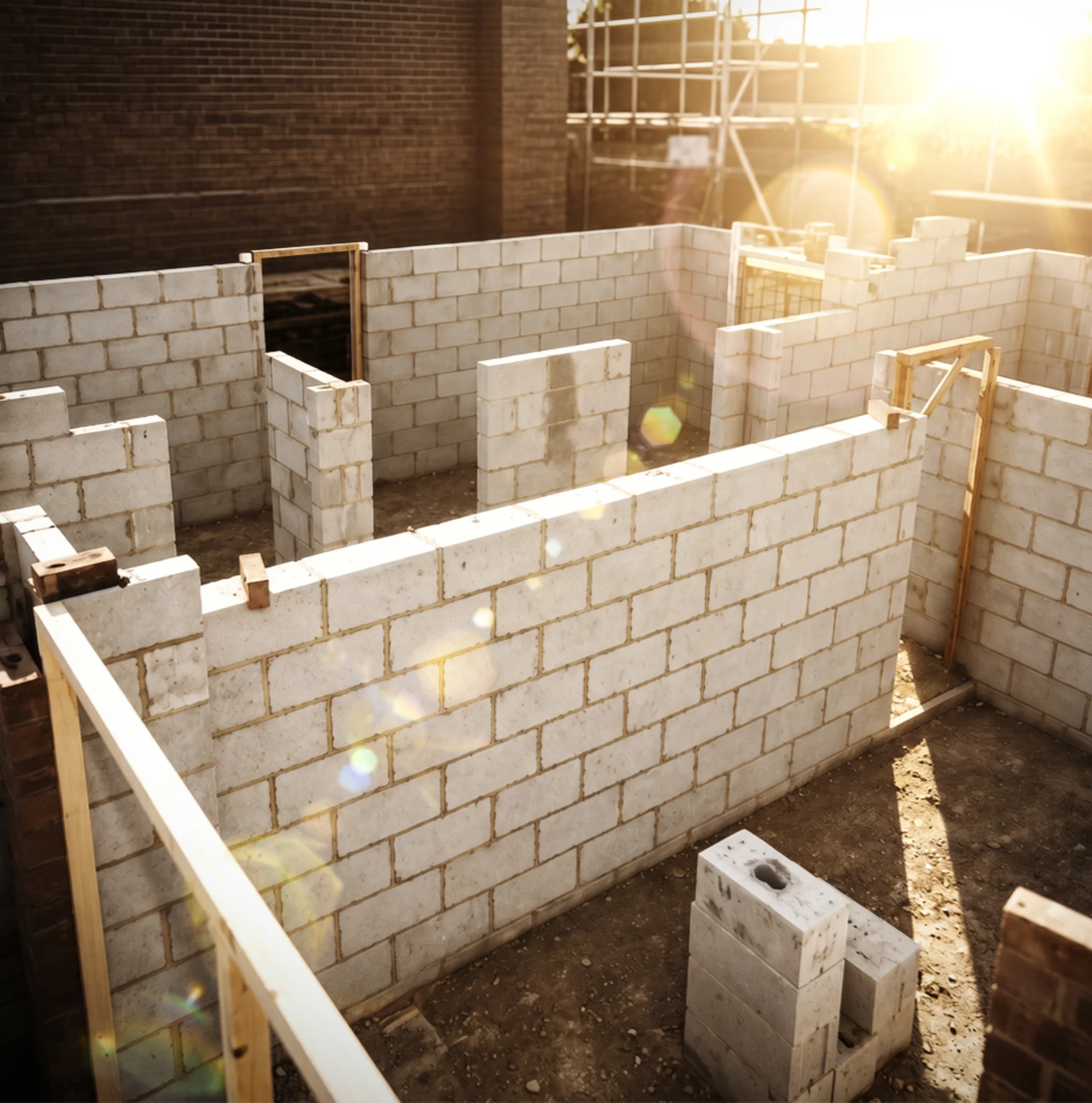
Both materials have their place in construction. Aircrete is lighter and offers enhanced thermal performance, making it easier to handle and install, while denser concrete blocks may suit applications requiring greater strength or density. The right choice depends on the project requirements.
Aircrete vs Concrete Blocks

Aircrete
Dense Concrete
Lightweight
Higher density
Enhanced thermal performance
Typically lower thermal performance
Easy to cut and shape
More difficult to cut and shape
Easier to handle
Higher manual handling weight
Can support faster installation
Typically slower to install
Need more help?

Technical Support

Contact our Technical Services team for product specification, design and technical enquiries, or use our live chat app during office hours. Click the logo bottom right on the Home page to ask your Technical question.

Related resources

Explore the range

Aircrete Products

Find the right H+H aircrete product for your project.
 

Where to use aircrete

Applications

Explore H+H solutions for walls, foundations, floors and other construction applications.

Technical information

Performance of Aircrete

Explore thermal, acoustic, fire, structural and other performance information.