
Sustainability
Building houses quickly, without repeating the mistakes of the past
As the drive for social and council housing accelerates, H+H UK’s Managing Director Calum Forsyth argues that speed and quality don't have to be mutually exclusive - but only if the industry chooses methods and materials with a proven track record.
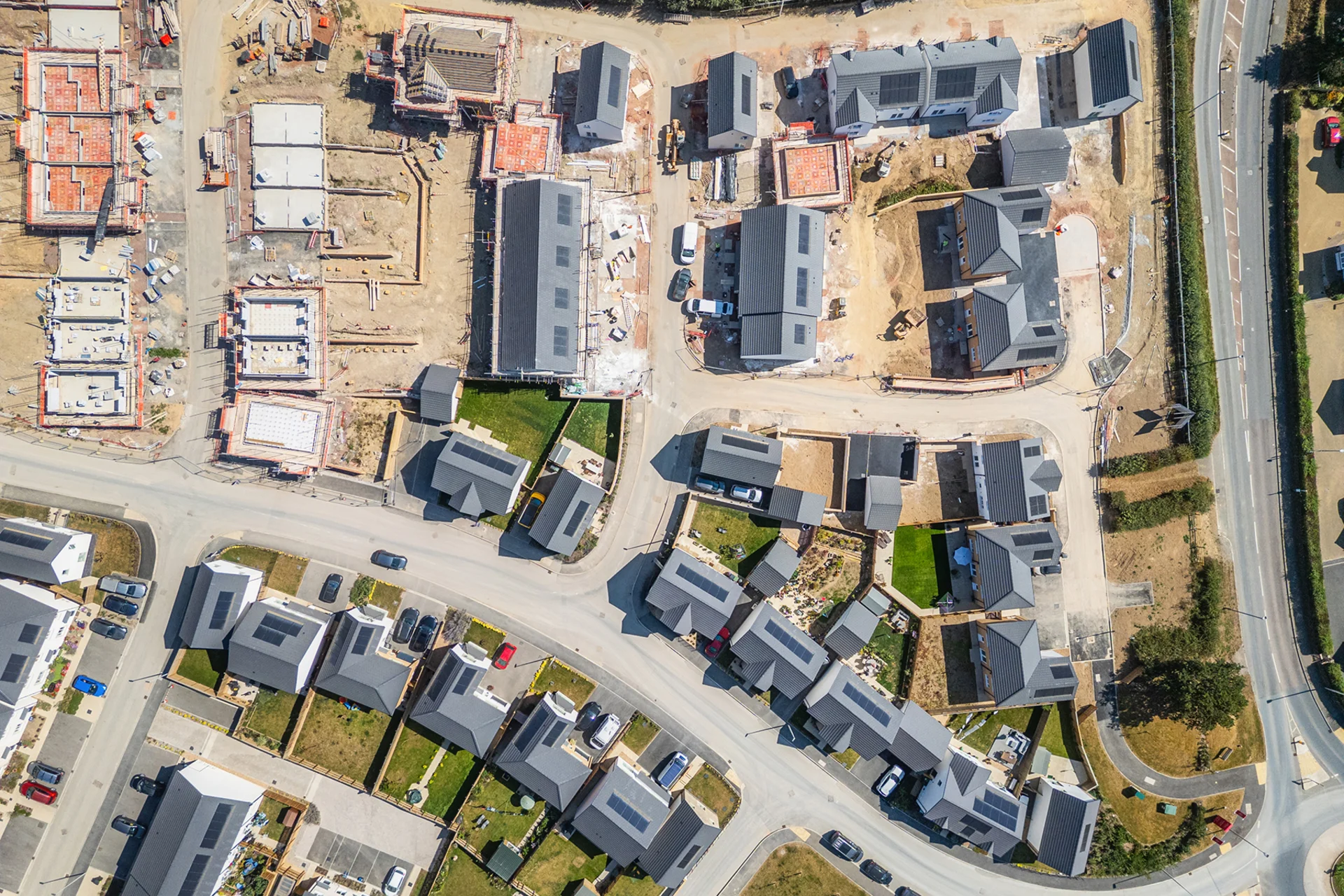
How do we build quickly without repeating the mistakes of the past?
As the drive for social and council housing accelerates, H+H UK’s Managing Director Calum Forsyth argues that speed and quality don't have to be mutually exclusive - but only if the industry chooses methods and materials with a proven track record.
We've built quickly before. In the years after the Second World War, the country faced a housing crisis not so different from the one we face now, and the answer was speed: prefabricated bungalows, designed and approved in a hurry, with a planned lifespan of just ten years.
Around 156,000 of these prefabs went up between 1945 and 1949, and roughly 8,000 are still standing today[i]. "Temporary" has a habit of becoming permanent. Much of the wider social housing built through that same boom used methods that hadn't been properly tested at scale, and it left a legacy of damp, mould and structural and fire-safety problems that housing associations and councils are still dealing with, eight decades on. Decisions made under pressure can result in problems that last for many years.
It's a history worth remembering now, because the pressure to build fast is back. Andy Burnham has pledged the biggest council housebuilding programme since the post-war period, alongside a commitment to end rough sleeping. Both are the right ambitions. We built this country out of a housing crisis once before, and given the right backing, there's no reason we can't do it again.
But we need to be honest about the risk that comes with speed. When the pressure is on to deliver volume quickly, the temptation is to go with the solution that promises to be fastest, and to worry about the consequences later. We've been down that road before, and we know where it leads.
The risk of unproven methods
Offsite and modular construction has been heavily promoted as the answer to build speed, and Homes England has required a proportion of some Affordable Homes Programme delivery to use modern methods of construction[ii]. However, several prominent modular manufacturers have gone into administration over the past few years, many due to the gap between their factory’s huge upfront cost and the market’s unpredictable demand. A large housebuilding programme doesn’t necessarily resolve that issue. Delivery will be spread across many different authorities, each with different timelines and with funding liable to be affected by spending reviews and elections.
Masonry, by contrast, is largely manufactured in the UK through a well-established supply chain that can respond to increased demand without requiring new factory infrastructure.
That's not to dismiss offsite methods; some are excellent, and H+H's Vertical Wall Panel system is itself categorised as an MMC solution. The distinction I’d draw is between innovative systems that have been developed using proven materials and processes, and more radical approaches. While the latter can offer significant benefits, we shouldn’t gamble large housing programmes on them until they’ve been proven at scale.
Built to last, not just built fast
Durability should be considered just as important as delivery speed, particularly for the councils and housing associations that will be responsible for managing and maintaining this housing stock.
Masonry construction, including traditional brick and block and our Vertical Wall Panel system, has a design life of over a century. Newer factory-built systems tend to be designed with a shorter lifespan of 60 years. Their relative lack of history can also create challenges around finance, insurance and long-term maintenance, especially where systems are regarded as non-standard construction.
Designing for the climate we actually have
We also need to factor in the impact of climate change when designing homes today. This summer has brought another reminder of just how quickly our climate is changing, with a run of serious heatwaves. Homes we build now need to perform for generations, in a climate that will be very different from today’s. In other words, we should be designing resilient homes, fit for the future world their occupants will be living in, rather than just meeting current building regulations.
Thermal mass has a vital role to play. Masonry has a higher thermal mass which can help buildings resist rapid temperature swings, keeping homes cooler during hot weather as well as warmer in winter, without relying on mechanical cooling that many social housing tenants simply can't afford to run. It’s a simple form of climate resilience, but one that’s easily overlooked.
Getting it right, this time
I'm not arguing against building quickly. Burnham is right that the industry needs to move, and that it needs government to back it with funding and planning reform to do so. But speed and quality aren't in opposition. It’s essential to choose methods and materials with a proven track record, rather than opting for whatever looks fastest on paper, and being honest about the maintenance and durability implications of the decisions we make.
We got a huge amount right in the post-war period, and we're still living, quite literally, with the parts we got wrong. As we head into the biggest council housebuilding drive in decades, we must make sure the homes we build now go on performing well for the people living in them for generations to come.
[i] https://heritagecalling.com/2022/08/04/a-brief-history-of-prefabs/
[ii] https://www.gov.uk/government/publications/the-affordable-homes-programme-annual-report-2024-to-2025/the-affordable-homes-programm How do we build quickly without repeating the mistakes of the past?e-annual-report-2024-to-2025