
Sustainability
Building homes to withstand climate change: why masonry matters
As climate risks grow, new research shows most people want new homes to be built resiliently. Discover why aircrete masonry outperforms timber for flood resistance, thermal comfort, and long-term sustainability.
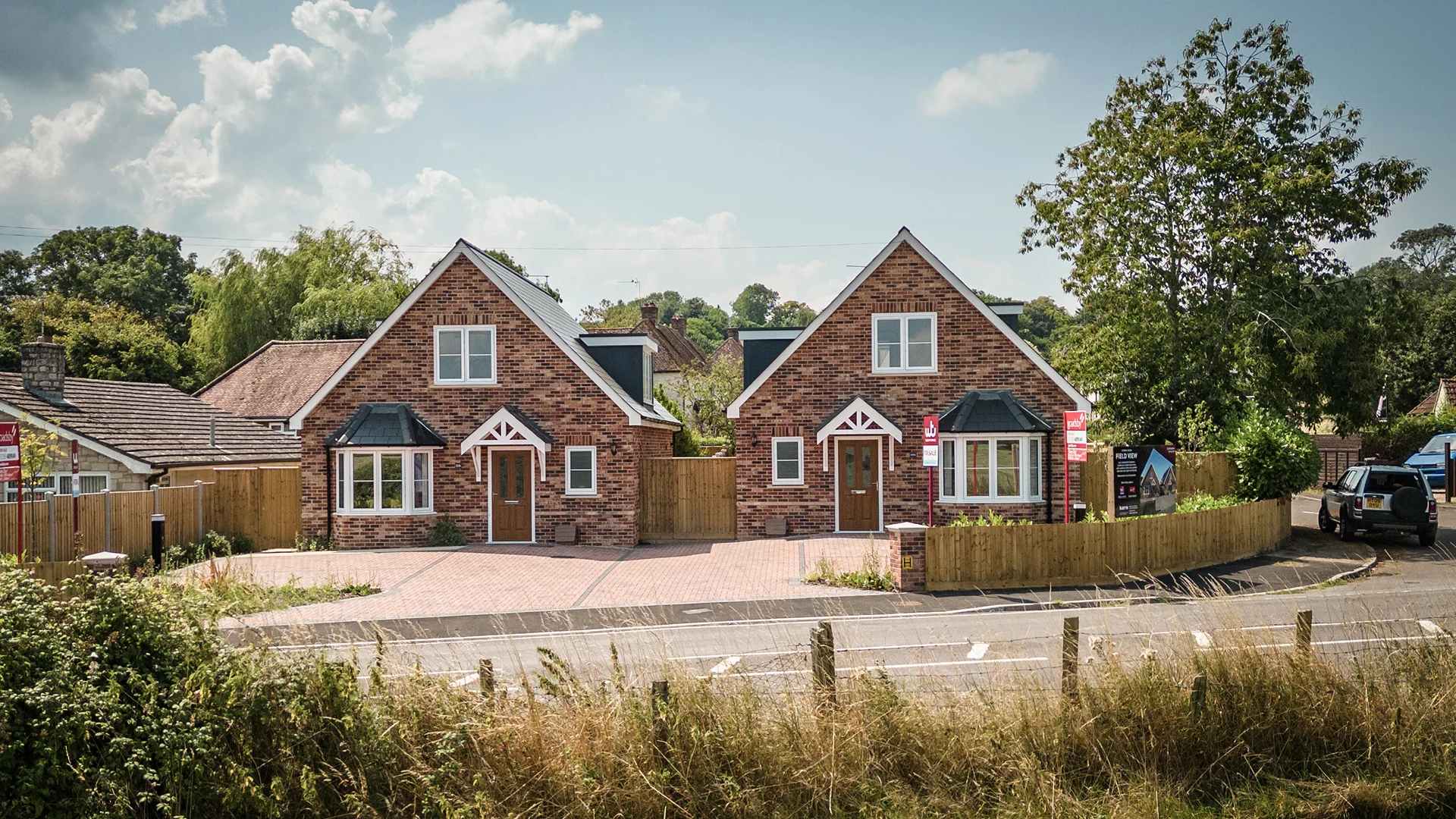
New research shows that most people in the UK want new homes to be built resiliently – and masonry delivers.
As the UK faces increasingly extreme weather, building new homes that are resilient to climate change has never been more important. According to the Climate Change Committee’s 2025 adaptation progress report, the risks to people, infrastructure, and housing from climate change are growing rapidly – and urgent action is needed to adapt the UK’s built environment.
New research by Aviva, carried out by Censuswide and published in October 2026, reveals that nearly three in four people (73%) agree that new homes should be built resiliently. This sends a clear signal to housebuilders: resilience is no longer optional – it’s expected.
Tackling overheating with thermal mass
A key risk posed by a warming climate is overheating in homes. With hotter summers and more frequent heatwaves expected, future-ready housing must be designed to stay cool and comfortable without excessive reliance on air conditioning.
This summer showed how real that risk already is. Following record-breaking temperatures, a survey carried out by Opinium for MyBuilder found that 35% of people said their home is no longer suitable for today’s climate, while 46% experienced poor sleep because of high temperatures.
Thermal mass – the ability of a material to absorb and store heat – plays a vital role in maintaining stable internal temperatures. Aircrete’s high thermal mass helps absorb excess heat during the day and slowly releases it at night, reducing internal temperature fluctuations and the risk of overheating. This passive cooling effect can reduce reliance on mechanical cooling systems, lowering both energy use and occupant discomfort.
UK Concrete and Opinium’s Homes 2025 survey found that 66% of respondents prioritised well-insulated walls, windows, doors, and roofing when choosing a new home – a strong indicator that energy efficiency and comfort are top of mind for buyers.
Resilience to fire
Higher temperatures also bring a greater risk of fire. According to the National Fire Chiefs Council, fire and rescue services in England and Wales responded to 966 wildfires between 1 January and 10 August 2026 – already more than in the same period of 2022 or 2025, previously two of the busiest years for wildfire activity on record. In August, fires spread from fields to destroy homes in Stourbridge in the West Midlands.
Aircrete does not burn and is classified as A1 non-combustible, the highest classification for reaction to fire, so it will not contribute to the spread of a fire. It is a quality homeowners value: UK Concrete’s 2025 survey found that 87% of people said it was important that their home was constructed from fire-resistant materials.
Flood resilience and material performance
Another major climate risk is the increased frequency and severity of flooding. The Environment Agency has emphasised the importance of property-level flood resilience (PFR) measures, and its latest National Assessment of Flood Risk shows that 6.3 million properties in England are in areas at risk of flooding from rivers, the sea or surface water.
Building with durable, non-degradable materials is key to reducing this risk. Masonry systems such as aircrete offer outstanding flood resilience. They don’t rot, warp or degrade over time, and their dimensional stability maintains structural soundness before, during, and after flood events. In contrast, timber construction is vulnerable to water damage and may require extensive replacement or remediation following flooding.
As the Mineral Products Association notes: “Masonry construction offers dimensional stability and structural integrity during and after flood events, a stable surface for waterproof membranes, fast restoration post-flood, and is a non-degradable material that doesn’t rot, rust or warp. No other construction method offers this level of resilience.”
Homegrown, sustainable materials
Sustainability and supply chain security also matter. UK Concrete’s 2025 survey revealed that 61% of people prefer homes built with local construction materials from the UK. H+H aircrete fits the bill: it is manufactured in the UK from locally sourced raw materials.
In contrast, structural timber is largely imported and subject to international market volatility, with growing concerns that increasing global demand may outstrip sustainable supply. These factors raise questions about the long-term resilience and environmental impact of relying on timber as a primary construction material.
A material homeowners trust
With growing concern about build quality, 52% of respondents to the UK Concrete survey said they would prioritise homes built with high-quality materials, while 63% said build quality should be a top government priority. Aircrete delivers on both counts.
Regional housebuilders like Karm Homes and Northstone have embraced H+H aircrete solutions for their proven performance and durability. Martin Keenes, Director at Karm Homes, explains: “We’ve looked at other MMC systems, such as SIPs, but found them to be more expensive than the masonry solution which centres around H+H Vertical Wall Panels – plus there are increased fire risks and higher insurance premiums with timber builds. We also prefer masonry because our customers expect the durability it provides.”
Northstone Site Manager Paul Morris adds: “With traditional brick and block you get a better build resulting in long-lasting, robust, energy-efficient homes. We’ve worked with H+H aircrete blocks on our developments and find them great products that are easy to work with.”
Building for climate resilience means using materials that stand up to heat, flooding, and long-term environmental change. Aircrete offers a future-proof solution: durable, thermally efficient, fire-resistant, and manufactured in the UK.
For housebuilders, the message is clear – resilience sells, and masonry delivers it.
Sources
- Aviva and Censuswide research (October 2026): https://www.aviva.com/newsroom/news-and-research-overview/news-releases/2026/10/building-new-homes-with-simple-package-of-flood-resilience-measures-could-save-60m-over-10-years/
- MyBuilder Heat-Trap Homes Report, research by Opinium (October 2026), as reported by Mortgage Strategy: https://www.mortgagestrategy.co.uk/news/over-a-third-of-homes-not-suitable-for-todays-hotter-climate/
- National Fire Chiefs Council wildfire data (August 2026): https://nfcc.org.uk/fire-chiefs-warn-of-sustained-wildfire-pressures-as-drought-spreads-across-england-and-wales/
- Reuters report on Stourbridge wildfires (August 2026): https://www.reuters.com/business/environment/wildfires-britain-hit-record-levels-after-homes-burn-intense-heat-2026-08-14/
- Environment Agency National Assessment of Flood Risk (December 2024): https://www.gov.uk/government/news/environment-agency-publishes-major-update-to-national-flood-and-coastal-erosion-risk-assessment
- UK Concrete and Opinium research, Homes 2025: A National Conversation: https://www.thisisukconcrete.co.uk/Perspectives/UKC-Housing-Report.aspx